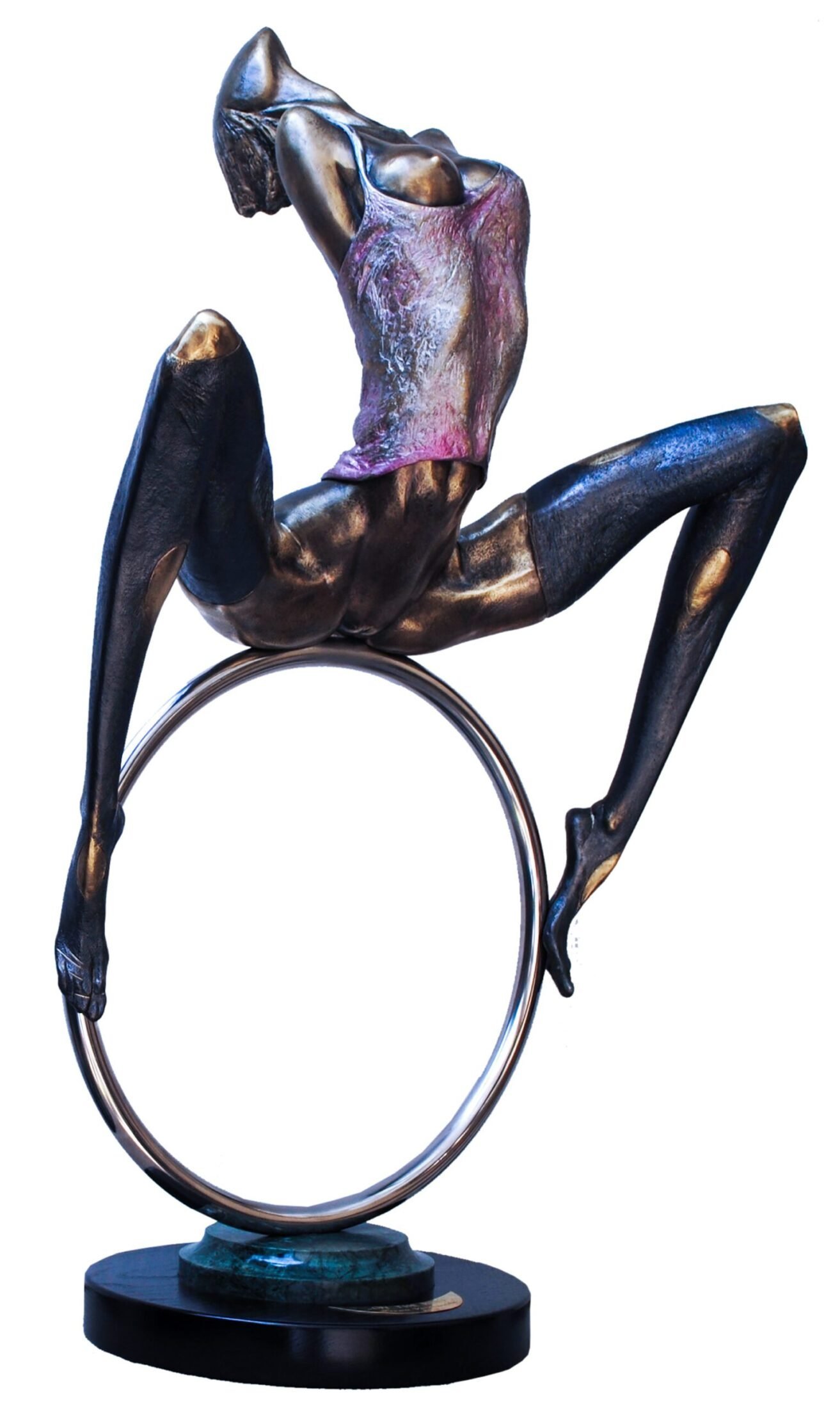
There’s something slightly off-balance in Gia Japaridze’s work—in the best way. His sculptures rarely settle into a fixed state. They lean, stretch, hover, or seem caught mid-thought, as if the material hasn’t fully decided what it wants to become.
Born in Tbilisi in 1945, Japaridze was trained within the rigor of Soviet academic sculpture, a system built on precision, anatomy, and permanence. He mastered it early. At the Tbilisi State Academy of Arts, where he studied from 1962 to 1968, he developed a command of form that earned him the Repin Scholarship and early admission into the Union of Artists of the U.S.S.R. His diploma work, The Hammer Thrower, already showed control over mass and proportion—but even then, there were hints of something less obedient to the rules.
What makes Japaridze interesting isn’t that he rejected that tradition outright. He didn’t. He absorbed it, then quietly started to bend it.
Bronze, granite, and marble are not passive materials in Japaridze’s hands. He works with their resistance. Bronze gives him warmth and intimacy; granite gives him density, gravity, and silence. His surfaces often keep the trace of touch, with uneven planes, softened edges, and tool marks that catch light differently throughout the day. The result is not polished perfection. It is something more alive.
Across his career, Japaridze has moved between public monument and intimate urban figure. Works such as Poseidon, Tree of Life, and Tree of Peace show his ability to handle mythic and civic subjects without losing the human scale. His sculptures have appeared in Georgia, Russia, Italy, the United States, and the Vatican, and his career has brought international recognition
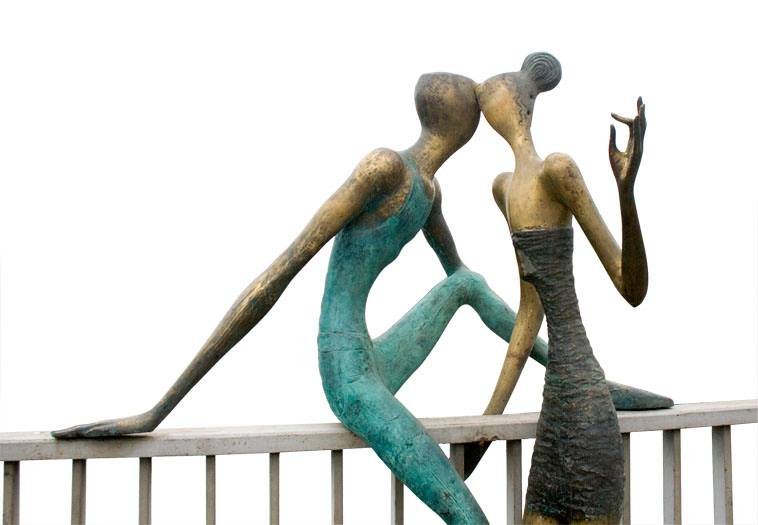
Still, some of his most memorable works are the quieter ones. In Georgia, pieces such as Woman with an Umbrella, Doctor on a Donkey, and Rendezvous (The Lovers) have become part of everyday public life. They are not monuments in the old sense. They do not impose authority on a square or street. Instead, they seem to notice the city from within it.
This public side of Japaridze’s practice, however, is only part of the picture. Away from the demands of civic space, his smaller works reveal a more experimental and personal language. The expectations of monumentality fall away, and the forms begin to loosen. What remains is a quieter investigation into balance, rhythm, and memory.
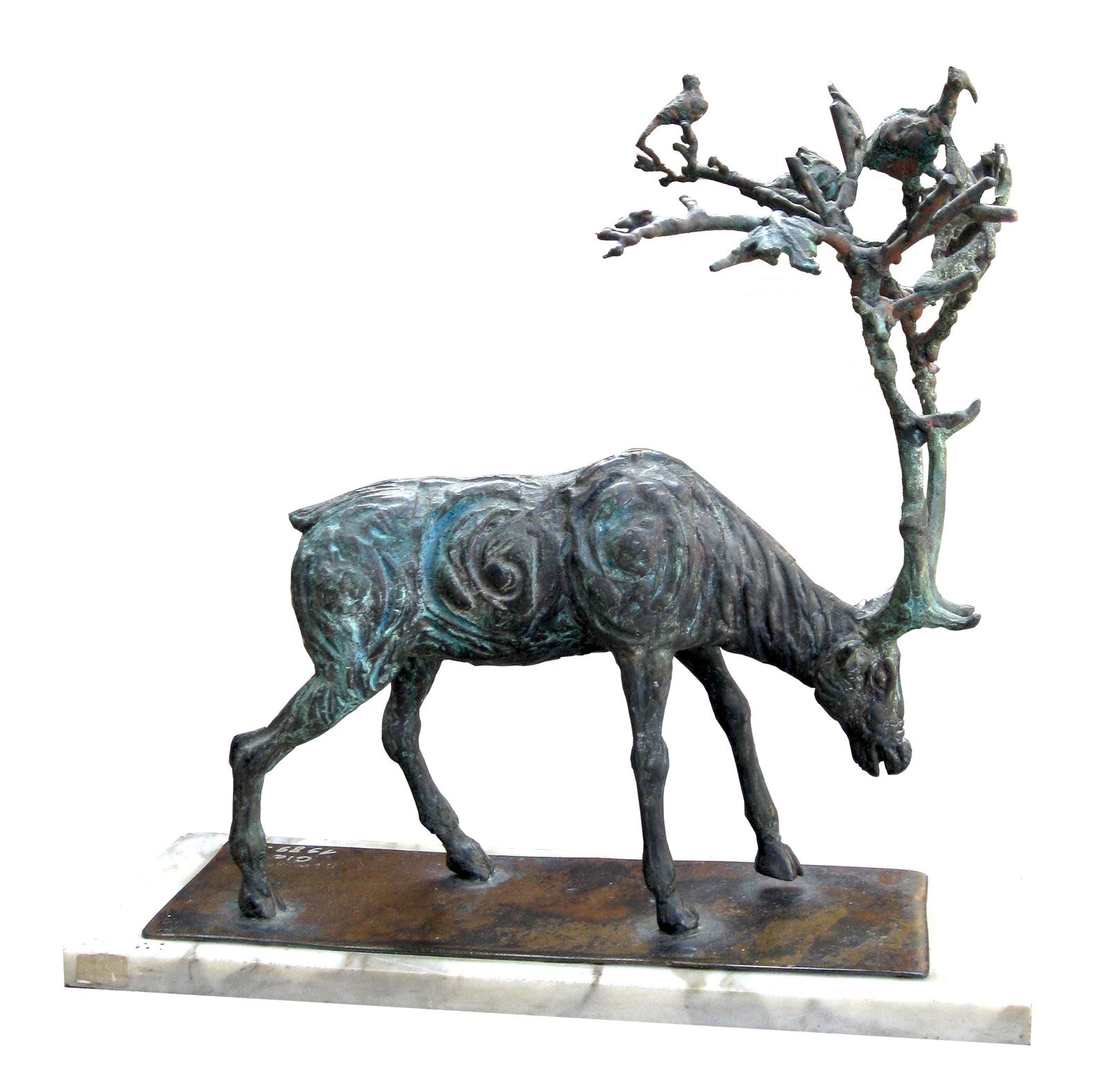
In these pieces, bodies and animals are rarely described in full. They are simplified, stretched, or broken down into essential volumes. A horse might lose its anatomical precision and become a sequence of curved masses, its movement carried through posture rather than detail. In another work, the same animal appears almost weightless, lifted into a suspended motion that feels closer to instinct than structure.
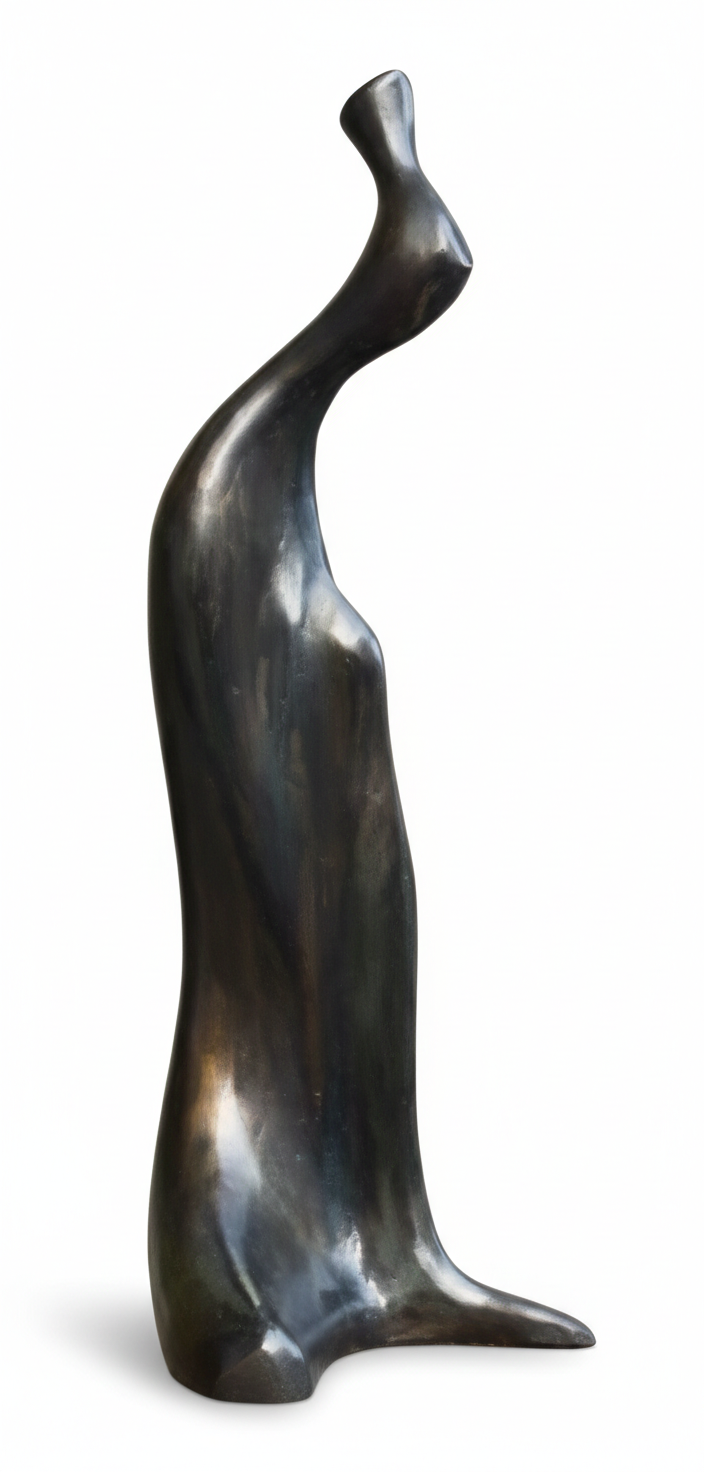
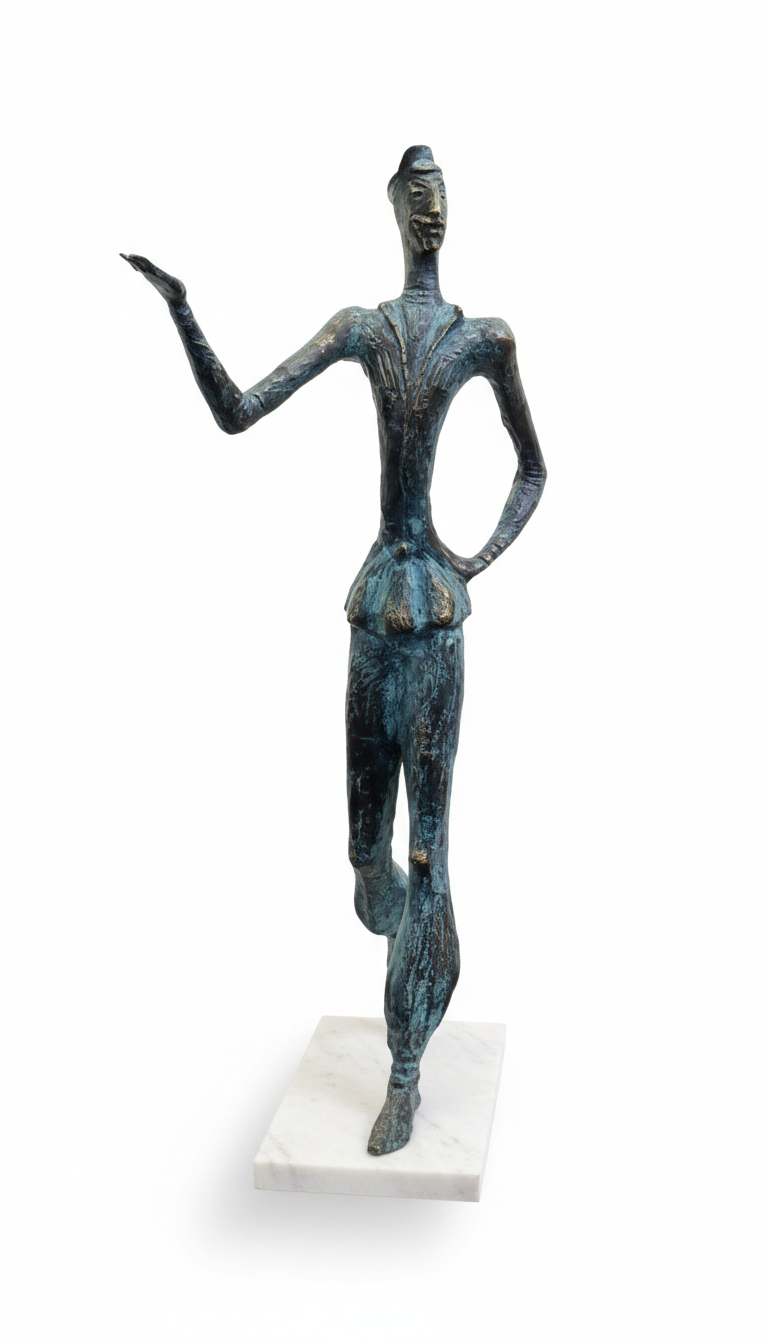
The blue patinated figures, marked with circular impressions across their surfaces, feel as though they have absorbed time rather than simply represented form. Their texture holds a kind of repetition, almost like echoes pressed into the material. Nearby, elongated human forms rise as single gestures—reduced to a vertical line that suggests a body without fully describing it. These figures exist somewhere between presence and disappearance, as if they are still forming.
What connects these smaller works is a sense of openness. They do not resolve into a single reading. They move between figure and abstraction, between structure and improvisation. The emphasis shifts away from representation and toward sensation—how the sculpture stands, how it leans, how it occupies space.
Seen alongside his monumental sculptures, these works deepen the understanding of Japaridze’s practice. The monuments establish permanence and shared presence. The smaller pieces introduce uncertainty, play, and a willingness to distort. Together, they suggest that scale does not change his concerns, only the way they are expressed.
At every level, Japaridze is working with the same underlying tension: weight against movement, stability against imbalance, material against gesture. Even in the most solid forms, there is always a sense of something about to shift.
His sculptures do not rely on spectacle or explanation. They ask for time. The longer one looks, the more the forms seem to change—edges soften, balance becomes less certain, and the material begins to feel less fixed.