Website is in Beta Release
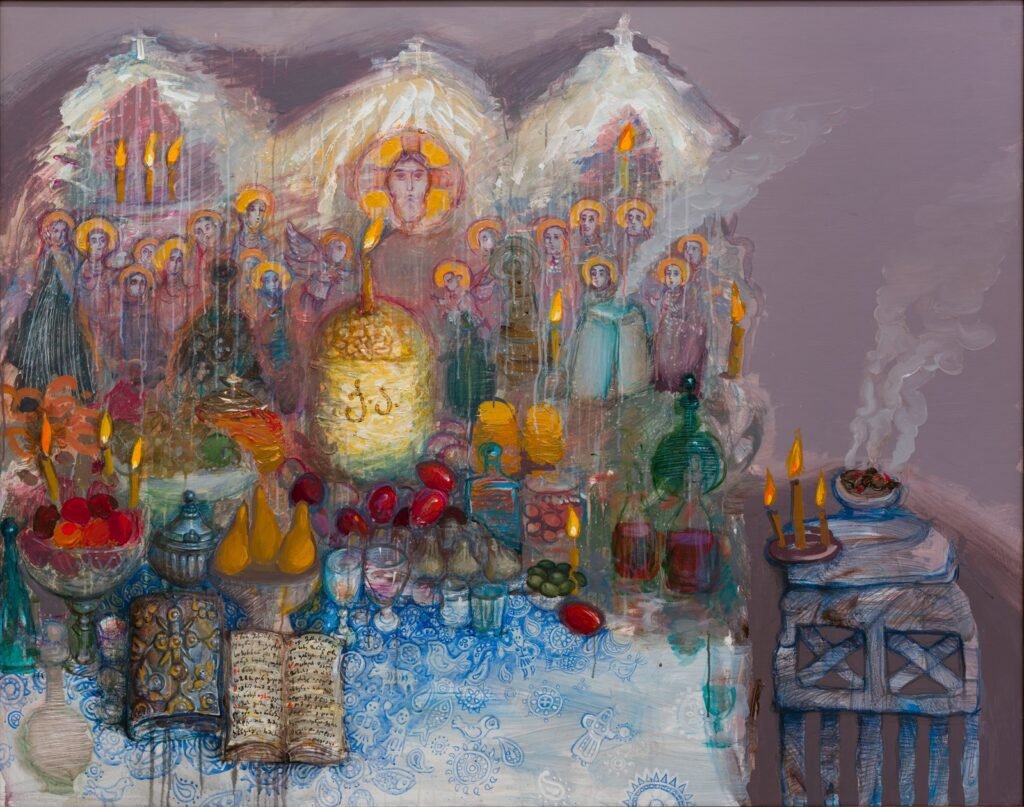
Still-Life — Dato Popiashvili — 2023 — Acrylic, Canvas

The Resurrection as Image: How Easter Shaped Georgian Art

Published April 8, 2026

In Georgia, Easter doesn’t arrive as a date on a calendar so much as a change in visual temperature. The country’s most familiar spring greeting—“Qriste aghsdga” (Christ is risen)—and its reply—“Cheshmaritad aghsdga” (Truly, He is risen)—move through streets and stairwells like a refrain. But the phrase is only the most audible layer of a deeper phenomenon: in Georgia, Easter functions as a kind of cultural tie—a centuries-old system for making survival look inevitable.

To talk about Georgian art without talking about Easter is to miss the structure beneath the style. Aghdgoma—literally Resurrection—has shaped not only what Georgia depicts, but how it depicts: in fresco cycles you walk through, in icons that train attention, in stone reliefs that turn façades into argument, and in modern painting where faith appears less as doctrine than as atmosphere.

Georgia’s defining painting tradition is architectural. Fresco here is not simply pigment applied to plaster; it is a three-dimensional discipline—a connecting ribbon through centuries of Georgian narrative, wrapping walls, apses, and domes into environments the viewer physically enters. The Easter story, accordingly, rarely appears as a single climactic picture. It is distributed across surfaces as a sequence—Passion, burial, descent, return—arranged for the body in motion, read through repetition and procession rather than a single glance.


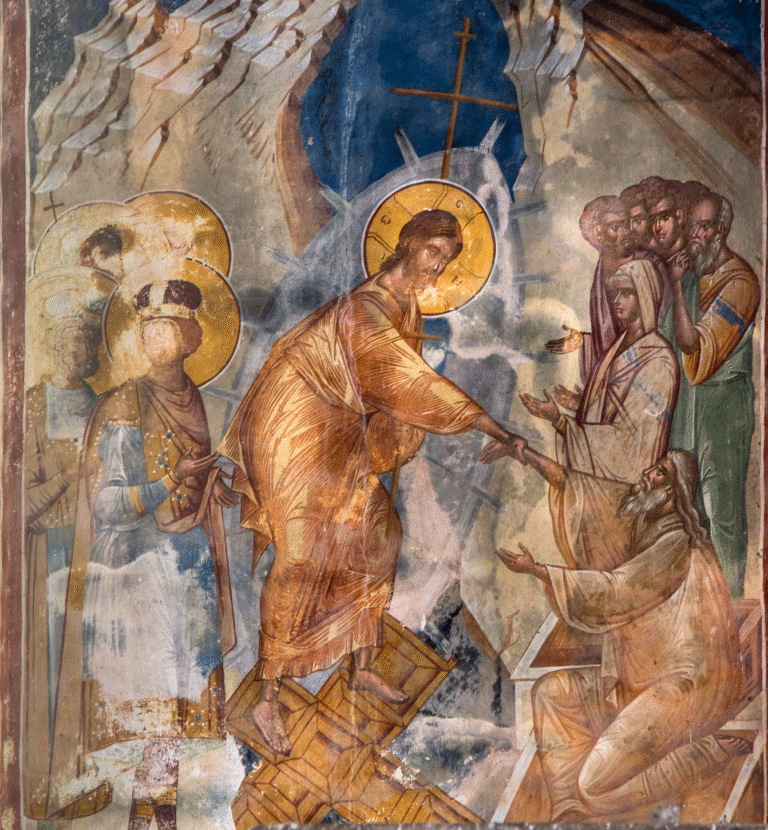
When Georgian art does compress Easter into one dominant motif, it reaches for the Orthodox Anastasis—Christ’s descent into Hades. This is not the Western image of a solitary figure rising from a sealed tomb. It is a composition built around connection: Christ descending into the underworld, pulling Adam and Eve upward by the wrist, the gates of Hell shattered underfoot—death’s architecture broken open from the inside out.

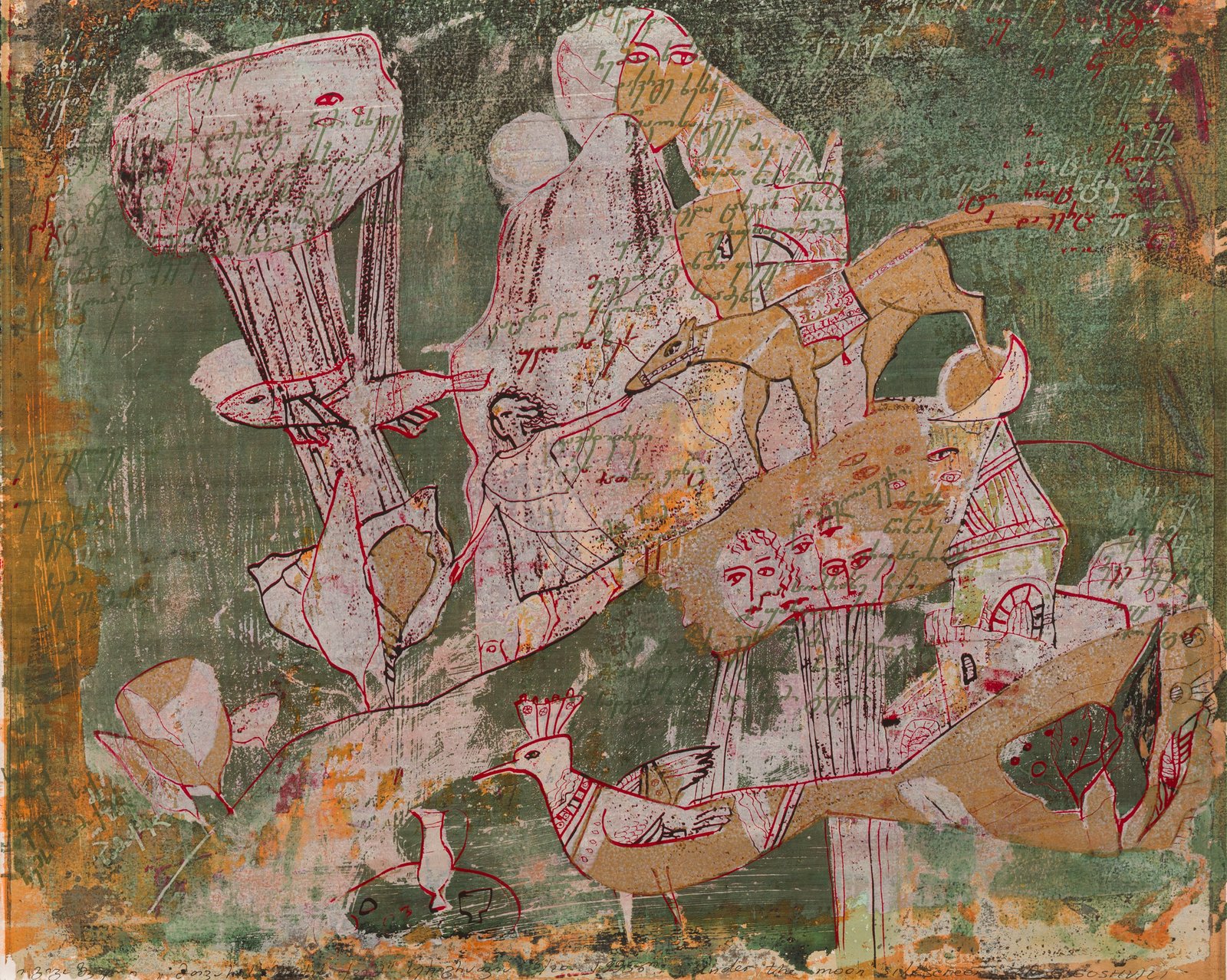
Anastasis fresco, Kintsvisi Monastery, Georgia. Christ pulls Adam from the abyss — the defining image of Georgian Easter. Art & Theology

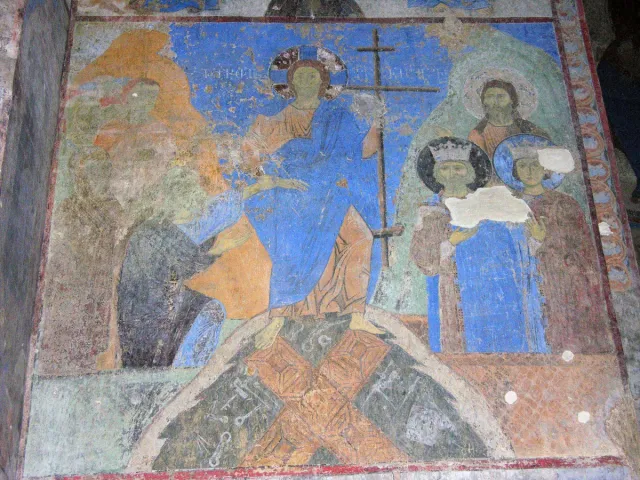
A named hand in the medieval wall: Damiane at Ubisi

Georgia’s medieval tradition is often discussed anonymously—schools, periods, regions. But occasionally a name survives and gives the story a pulse. Damiane, a 14th-century mural painter associated with Ubisi Monastery, reminds us that doctrine may be fixed while style remains a living question: what a face can hold, what gesture can carry, what space can suggest.

Pirosmani: faith without spectacle

In the early 20th century, Georgian Easter acquires a radically different register—one that feels, in today’s terms, almost like an anti-monument.

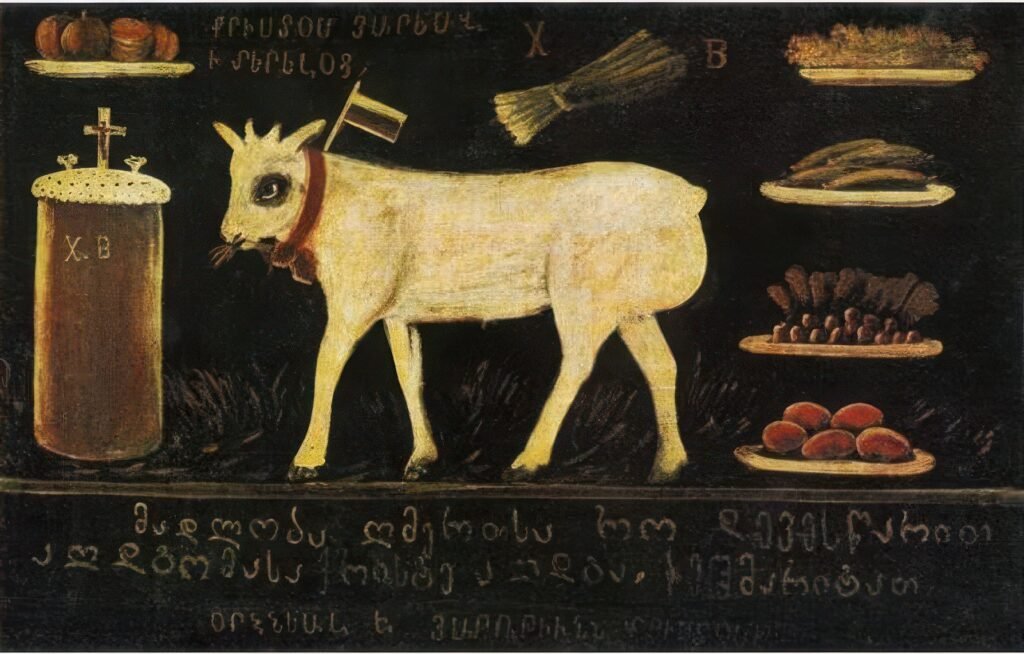
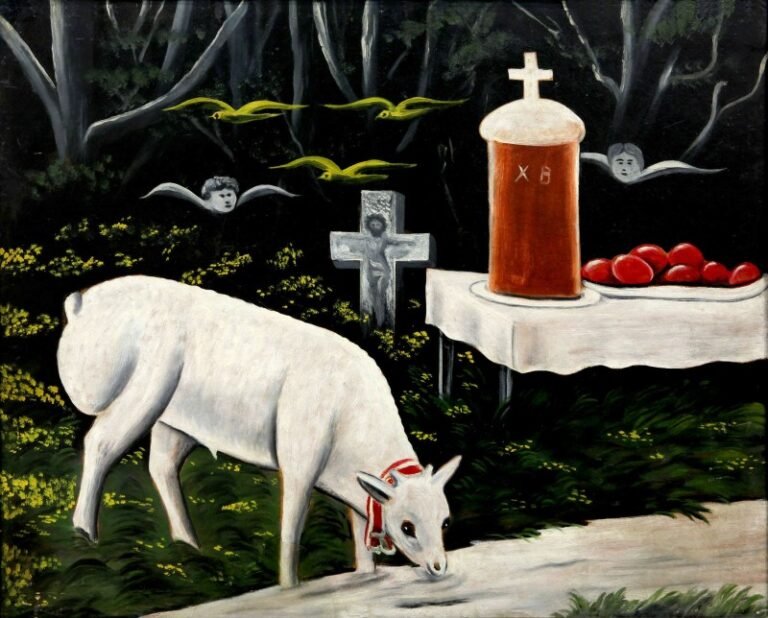
Niko Pirosmani’s Easter Lamb (c. 1914) carries the artist’s own handwritten inscription: “Thanks to God for this Easter. Christ has risen, indeed so. Glory to…” The trailing-off reads less like a flourish than a limit—language failing politely in front of gratitude.

Niko Pirosmani, Easter Lamb (A Paschal Lamb), c. 1914. Oil on oilcloth. Art Museum of Georgia, Tbilisi.

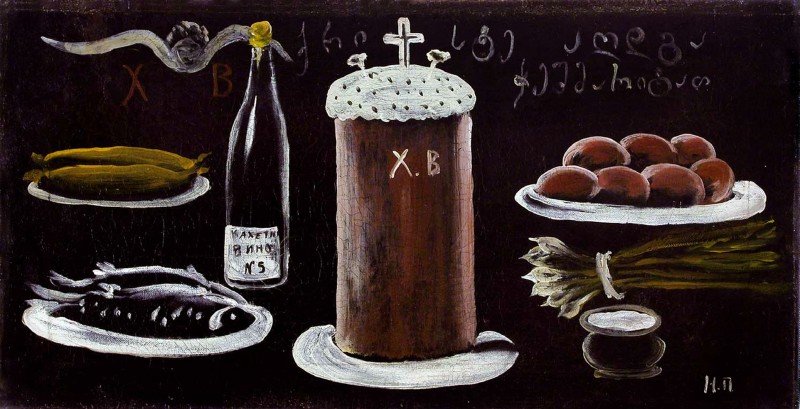
Pirosmani doesn’t so much illustrate theology as show what it looks like after it has seeped into the walls of everyday life. The sacred is no longer staged at the scale of domes and gold. It sits inside a jug, a lamb, a plate of red eggs, a painted surface that has no interest in impressing anyone. Pirosmani rides on the feeling Easter brings to the individual—that private, hard-to-name gravity the day carries—and strips it down to its essence. Not just church. Not just what happens behind the doors of the cathedral. But what happens after you walk out. What stays in the chest. What sits at the table with you. What looks back at you from the eyes of a lamb with a ribbon around its neck. He doesn’t bring the viewer to Easter. He brings Easter to the viewer.

Easter Lamb - Niko Pirosmani
Still Life - Niko Pirosmani
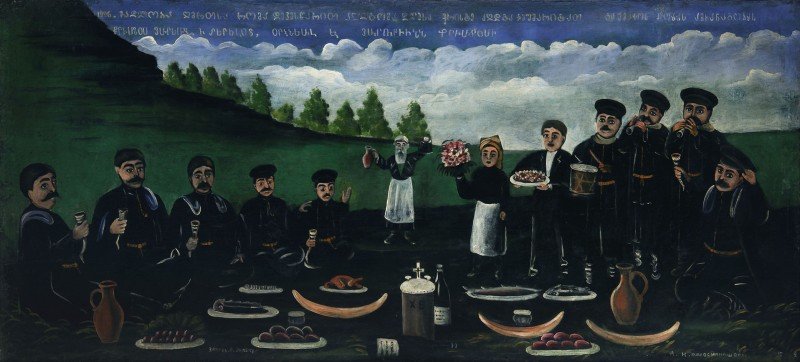
Easter Festival - 1906 - Niko Pirosmani

The contemporary continuation

Georgia sits on a geopolitical fault line, but its Easter art offers a different kind of mapping—one that charts endurance through form. Fresco teaches time. Icon teaches attention. Stone teaches permanence. Pirosmani teaches intimacy. And the Resurrection repeated in pigment, gold, and limestone, becomes less a topic than a method: a way of insisting, aesthetically and socially, that what looks finished can reopen.

In today’s Tbilisi, that method has not concluded but evolved further in  paintings of such prominent artists like Otar Vephkhvadze, Dato Popiashvili in such paintings as Easter and Easter Still Life.

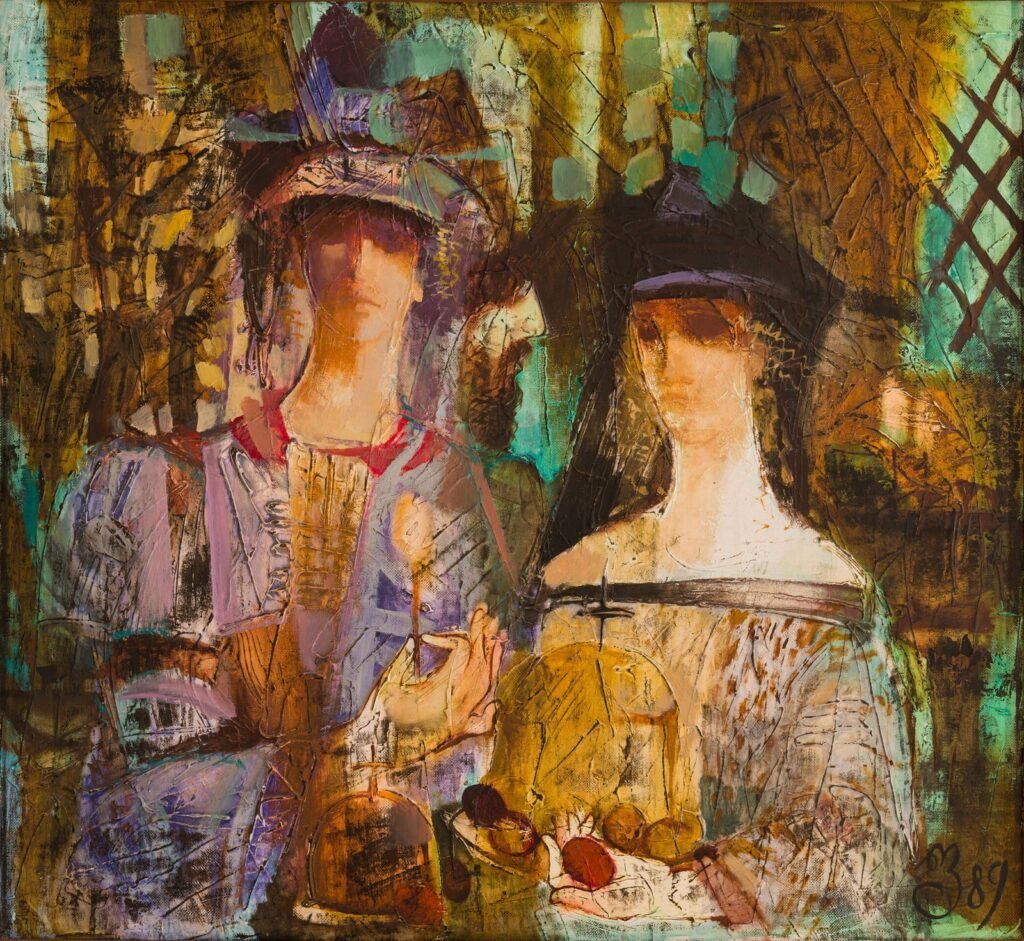
Easter — Otar Vepkhvadze — 1989 — Canvas, Oil

Otar Vephkhvadze’s Easter (1989) carries the Paschal subject into a textural, almost sculptural register. Two figures—rendered in heavy impasto, their faces warm and mask-like—stand together holding a lit candle between them, with Easter eggs and bread resting quietly below. The surface is dense, layered, scraped back like old plaster. Easter here is not proclaimed. It is held—between two bodies, in silence, in the weight of paint itself.

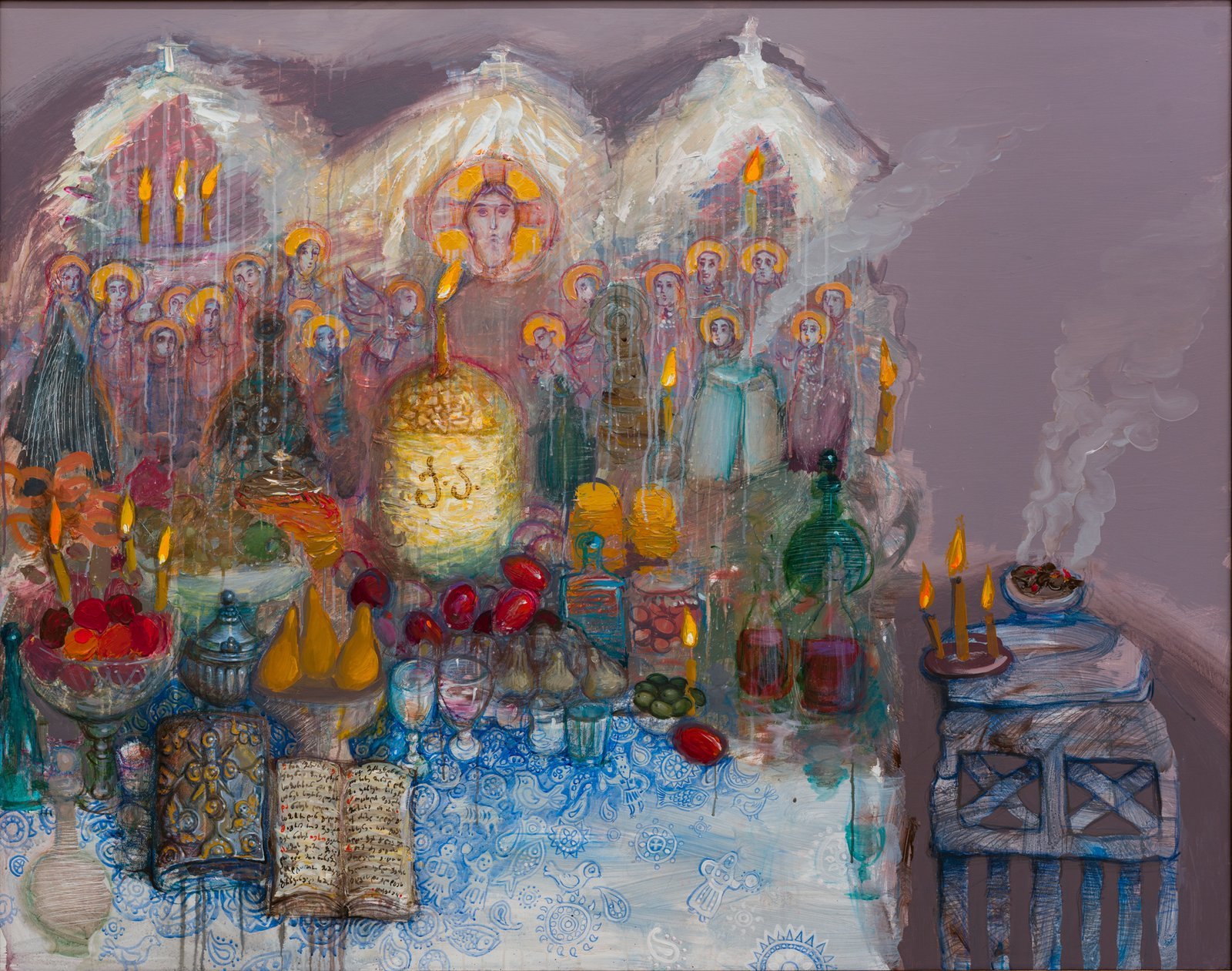
Still-Life — Dato Popiashvili — 2023 — Acrylic, Canvas

Dato Popiashvili‘s Easter Still Life depicts the night of Easter at home. The painting shows a table ready for the after-mass feast: candles lit for prayer, red Easter eggs on the surface, an open Bible laid beside them, a traditional Georgian tablecloth covering the table—its ornamental pattern drawn directly into the paint. All of this sits against a grey-purple background that creates a quiet contrast between the warmth and detail of the table and the undefined space surrounding it. But above the table, haloed figures—Christ at the center, saints and angels flanking—rise through the composition in translucent, spectral layers, their golden nimbi pressing into the domestic scene as if the boundary between home and church had dissolved. The candle flames appear in both registers—on the table and among the saints—binding the earthly and the heavenly through a single repeated gesture of light.

Their paintings carry the centuries-old tradition into a new age—not by imitating the past, but by growing from it. The Anastasis has left the apse and entered the living room. The gold mosaic has become candlelight. The fresco cycle has compressed into a single domestic scene. What remains constant is the orientation: Georgian art still begins from the premise that the image, like the faith it carries, is never truly finished.


So the greeting returns each spring—not as nostalgia, but as a living caption beneath an image still being composed:

Qriste aghsdga.
Cheshmaritad aghsdga.
 

Journal

Acquisition List
Your cart is currently empty!.

You may check out all the available products and buy some in the shop.

Continue Shopping
Add Order Note
Estimate Shipping